Stop quoting Steve Ballmer
Not "Developers Developers Developers", that one is great. The cancer one.

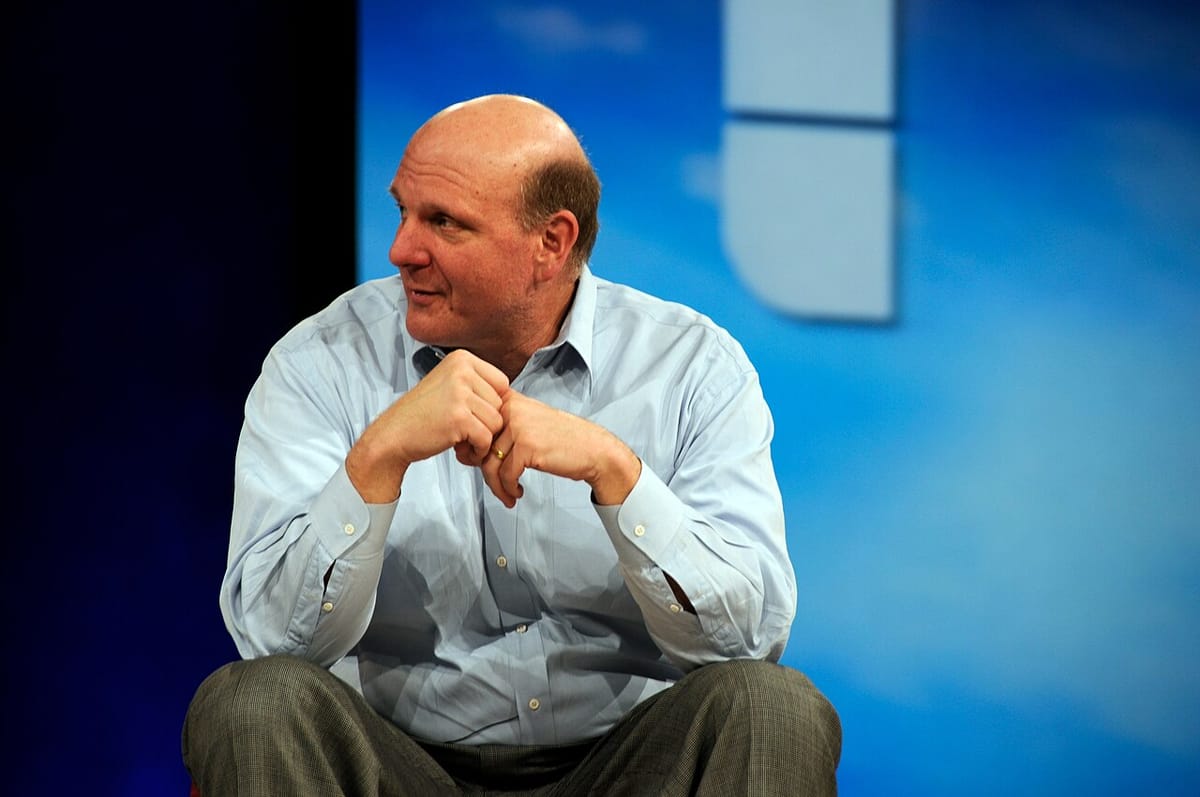
Every tech press story on new Azure Linux release, a WSL milestone, a Microsoft Linux kernel contribution, a patent pledge, and somewhere in the first few paragraphs someone reaches back to 2001 to quote Steve Ballmer calling Linux "a cancer."
Stop.
It's played out.
The quote is 25 years old, it is almost always stripped of context, and it was never really about Linux in the way you probably think.
What Ballmer actually said
June 1, 2001, in the Chicago Sun-Times. The original is offline, but the exchange has been reproduced many times:
Q: Do you view Linux and the open-source movement as a threat to Microsoft?
A: "Yeah. It's good competition. It will force us to be innovative. It will force us to justify the prices and value that we deliver. And that's only healthy... Open source is not available to commercial companies. The way the license is written, if you use any open-source software, you have to make the rest of your software open source... Linux is a cancer that attaches itself in an intellectual property sense to everything it touches. That's the way that the license works."
He opens by calling Linux "good competition." Nobody quotes that part.
It was aimed at the GPL, not at Linux
See where Ballmer lands: "in an intellectual property sense," and "that's the way that the license works." Ballmer was not describing the kernel. He was describing copyleft, the term in the GPL that requires distributed derivative works to carry the same license. Ballmer's fear was that it would spread: use a little GPL code, be forced to GPL the rest.
That is a critique of a license, not of an operating system.
Whether you think that was justified or FUD, up to you, but objectively no one really knew at the time.
The legal questions were real
In 2001, how far the GPL reached was an open question. Was the GPL even enforceable, and as a license, a contract, or both? Did linking to a GPL library trigger it? There were some ideas, some legal scholar opinions, but the GPL was not written by a lawyer, and there was no case law.
These were open legal questions.
And it got real, fast. In March 2003, SCO sued IBM for a billion dollars, claiming Unix code had leaked into the Linux kernel. It then mailed warning letters to roughly 1,500 of the world's largest companies, the Fortune 1000 and Global 500, telling them that running Linux could expose them to liability, and floated SCOsource licenses to make the problem go away. Novell countered that it, not SCO, owned the Unix copyrights.
The GPL landed in the middle of it.
IBM counterclaimed that SCO had violated the GPL by charging for Linux it had shipped under that same license, and SCO fired back that the GPL was "unenforceable, void" and unconstitutional.
The license Ballmer called a cancer was in the middle of high-stakes litigation.
For a brief time, it was a mess.
Ballmer's concern about the virality of the GPL may appear to have been exaggerated in retrospect. But concerns around its potential for expensive litigation were not wholly unfounded at the time.
Those questions have answers now
The GPL survived.
SCO's attack on the GPL collapsed under its own weight, since SCO had shipped Linux under the GPL itself, so either the license was valid or SCO was the infringer. SCO dropped those claims in 2004.
The contagion never showed up, and the courts are what made that plain. Jacobsen v. Katzer (2008) held that open source license terms are enforceable, and that breaking them is copyright infringement. Artifex v. Hancom (2017) held the GPL is an enforceable contract too, with real damages.
The mechanism they confirmed is nothing like a virus: copyleft is a condition on a copyright license, it attaches when you distribute a derivative work, and it is enforced by the copyright holder. Break it and the remedy is an enforcement action, an injunction to stop shipping or a bill for damages, not the automatic relicensing of your codebase.
None of that was settled law in 2001. The cases that settled it came later.
We now have case law and precedent. Better yet, we now have cross-licensing agreements and patent troll defense pacts.
Which is why Microsoft can now ship a GPLv2 Linux kernel inside Windows and lose no sleep. WSL2 runs a real Linux kernel. Microsoft publishes its modified source to satisfy the GPL, the kernel runs as its own component, and much of Windows stays proprietary (all the cool new stuff is open source). The exact thing Ballmer warned about, the GPL attaching itself to Windows, is a shipping feature now, maintained in the open.
The GPL litigation storm has passed. Novell won the copyright question, affirmed on appeal in 2011. SCO v. IBM settled in 2021 for $14.25 million, dismissed with prejudice. The Xinuos successor suit dropped its antitrust claims and lost on copyright in 2025.
Microsoft is a different company
- Joined the Linux Foundation in 2016 as a Platinum member.
- Runs Linux across Azure, where about two-thirds of customer cores are Linux, and open-sourced WSL in 2025.
- Extended patent indemnification to open source on Azure via Azure IP Advantage in 2017.
- Joined the LOT Network in 2018 to blunt patent trolls.
- Joined the Open Invention Network in 2018, pledging 60,000+ patents royalty-free to protect Linux.
- Funded Unified Patents' Open Source Zone in 2019 to defend Linux from patent trolls.
The company once accused of aiming patents at Linux now pays to defend Linux from patent trolls.
Even Ballmer let it go. In 2016, when Microsoft brought SQL Server to Linux, he said he "loved" it and emailed Satya Nadella to say so.
Retire it
When a company changes course and starts doing the right thing, the pragmatic move is to notice it and ask for more. That is how you get more of the behavior you want.
Dragging out a 25-year-old soundbite is just lazy. The "cancer" line has no work left to do. No context, wrong target, questions long since resolved, company long since changed. Dropping it into a 2026 story about Azure Linux or WSL tells the reader nothing true about the present.
Stop quoting Ballmer.